
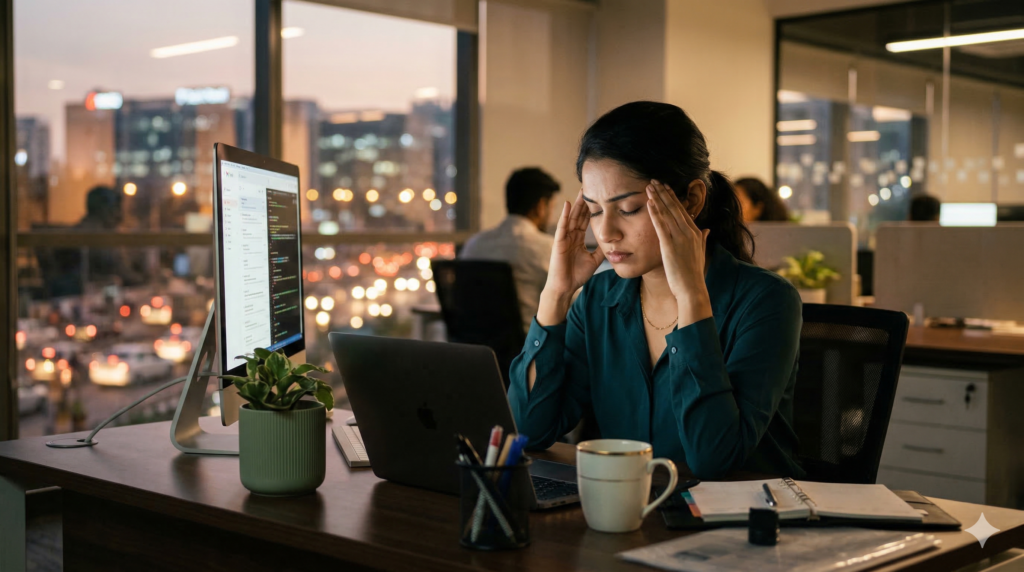
It’s 9 PM on a Wednesday, and you’re still stuck in Bangalore traffic on Hosur Road, heading home after another 11-hour workday. Your neck feels like concrete. Your head is throbbing. You can’t remember the last time you slept through the night without waking up at 3 AM with your mind racing about project deadlines. Sound familiar? If you’re nodding along (and your stiff neck is making that painful), your body is screaming for help. The good news? A stress relief massage Madiwala might be exactly what you need to hit the reset button on your overwhelmed nervous system.
Working in Bangalore’s tech hub means you’re no stranger to occupational burnout. The long hours, constant screen time, back-to-back meetings, and pressure to deliver can take a serious toll on your physical and mental wellness. But here’s what most people don’t realize: stress isn’t just an emotional experience. It’s a physiological response that creates measurable changes in your body, from elevated cortisol levels to chronic muscle tension. And when left unchecked, these physical stress symptoms can snowball into serious health issues.
In this guide, we’ll walk through seven clear signs that your body is begging for professional stress management solutions. More importantly, you’ll discover how targeted massage therapy benefits can restore your work-life balance and help you feel like yourself again. Whether you’re in Koramangala 2nd Block burning the midnight oil or commuting from BTM Layout, this is your wake-up call to prioritize your wellness.
Sign #1: Persistent Tension Headaches That Won’t Quit
Let’s start with one of the most common stress biomarkers: headaches that feel like a tight band wrapped around your skull. If you’re reaching for painkillers multiple times a week, you’re treating the symptom, not the cause. Tension headaches originate from muscle knots formation in your neck, shoulders, and scalp. When you’re stressed, your sympathetic nervous system goes into overdrive, causing these muscles to contract and stay contracted for hours or even days.
Here’s what’s happening beneath the surface: chronic muscle tension restricts blood flow to your head and triggers the release of inflammatory compounds. This creates that dull, persistent ache that starts at the base of your skull and radiates forward. You might notice it gets worse as the day progresses, especially after long stretches at your desk. By evening, you’re squinting at your laptop screen, rubbing your temples, wondering why this keeps happening.
The beauty of a body massage for stress Bangalore is that it addresses the root cause. A skilled therapist can identify those trigger points in your neck and shoulders where tension has accumulated. Through targeted pressure and specific massage techniques, they release the muscle knots, improve circulation, and help reset your nervous system from “fight or flight” mode to “rest and digest.” Many clients report their headaches disappearing completely after just one session focused on the neck and shoulder region.
Working late nights in Koramangala? Here’s what your body is telling you: those headaches aren’t just inconvenient—they’re warning signs. Your muscles are fatigued from holding the same position for too long, and your stress response is stuck in the “on” position. A targeted stress relief treatment can break this cycle before it becomes your new normal.
Sign #2: Your Neck and Shoulders Feel Like They’re Made of Stone
Touch the back of your neck right now. Does it feel tight? Hard? Maybe even a little tender when you press? That’s body tension relief calling your name. Your neck and shoulders are prime real estate for stress accumulation. These muscles work overtime when you’re hunched over a laptop, driving through Bangalore traffic, or even just carrying the mental weight of your responsibilities.
The technical term is upper crossed syndrome, but you don’t need to know the jargon to feel the effects. Your neck flexors weaken while your upper trapezius and levator scapulae muscles become chronically tight and overactive. This creates that characteristic “rocks in your shoulders” feeling that makes it hard to turn your head or reach overhead without discomfort. You might find yourself constantly rolling your shoulders or cracking your neck, seeking temporary relief that never quite comes.
Here’s the problem with chronic neck and shoulder tension: it doesn’t stay localized. Those tight muscles pull on surrounding structures, affecting your posture, limiting your range of motion, and creating compensatory patterns that spread tension to your mid-back and even your lower back. Before you know it, your entire upper body feels locked up. This is where professional massage therapy becomes essential rather than optional.
Southern Spa’s Instant Tense Away package was designed specifically for this problem. This focused treatment targets the neck, shoulders, and upper back—the exact areas where tech professionals carry their stress. Using a combination of deep tissue techniques and pressure point therapy, our trained therapists systematically release the accumulated tension, working through layers of muscle to restore flexibility and comfort. It’s like hitting the reset button on your upper body.
Sign #3: Sleep Issues Are Becoming Your New Normal
Remember when you could actually sleep through the night? When you’d hit the pillow and wake up eight hours later feeling refreshed? If that feels like a distant memory, stress has likely disrupted your circadian rhythm disruption and your body’s natural ability to enter deep, restorative sleep. You might struggle to fall asleep because your mind won’t stop racing, or you wake up at 2 or 3 AM and can’t get back to sleep. Either way, you’re exhausted.
The connection between stress and sleep problems is well-established in wellness research. When you’re chronically stressed, your body maintains elevated cortisol levels even at night when they should naturally drop. This keeps your nervous system activated, making it physiologically difficult to transition into the deep sleep stages where your body repairs tissue, consolidates memories, and restores energy. You end up stuck in light sleep, tossing and turning, checking your phone, getting more frustrated as the hours tick by.
Poor sleep then creates a vicious cycle: lack of rest makes you more susceptible to stress the next day, which further disrupts your sleep that night. You start relying on coffee to function during the day and maybe a drink to “wind down” at night. But you’re just masking the problem, not solving it. Your body craves genuine relaxation—the kind that comes from actually releasing physical tension and calming your overactive nervous system.
Southern Spa’s Aromatherapy massage service is specifically designed to address sleep issues and mental wellness practices. The treatment uses gentle, flowing strokes combined with aromatic oils that have been scientifically shown to reduce cortisol and promote relaxation. Clients frequently report falling asleep on the table during the session—and then sleeping better that night than they have in weeks. The effects often compound over multiple sessions as your nervous system learns to relax more easily.
Sign #4: You’re Irritable and Your Patience is Running on Empty
Have you snapped at a colleague over something minor recently? Found yourself unusually frustrated by small inconveniences? Maybe you’re short with your family when you get home, or that driver who cut you off on Hosur Road sent you into a disproportionate rage? This isn’t you being a bad person—it’s stress literally changing your brain chemistry and shortening your emotional fuse.
Chronic work-related stress depletes neurotransmitters like serotonin and GABA that help regulate mood and emotional responses. Meanwhile, your stress hormones remain elevated, keeping you in a state of hypervigilance where everything feels like a potential threat. Your brain gets stuck in reactive mode, interpreting neutral situations as negative and minor frustrations as major problems. You’re essentially walking around with your nervous system’s alarm system on high alert all the time.
The physical component of this irritability is significant too. When your muscles are tense and your body is uncomfortable, it lowers your tolerance for psychological stress. Think about how much more patient you are after a good night’s sleep versus when you’re exhausted. The same principle applies to physical tension. When your body hurts, your mental resilience suffers. This is why addressing physical stress symptoms through body tension relief techniques can have such profound effects on your emotional state.
Regular massage therapy offers a two-pronged approach to irritability. First, it directly reduces the physical discomfort that’s draining your patience. Second, it triggers the release of endorphins and oxytocin—your body’s natural feel-good chemicals that counter the effects of stress hormones. Many clients describe feeling not just physically relaxed after a session, but emotionally lighter, like a weight has been lifted. That’s your nervous system returning to baseline, allowing you to respond to life’s challenges with more patience and perspective.
Sign #5: Muscle Knots You Can Actually Feel
Run your hand along your upper back, between your shoulder blade and spine. Feel those lumpy, tender spots? Those are myofascial trigger points—commonly called muscle knots. They’re areas where muscle fibers have contracted and can’t release, forming palpable bands of tight tissue. When you press on them, you might feel local tenderness or even pain that radiates to other areas. These knots are your body’s physical manifestation of chronic stress and tension.
Here’s what creates these stubborn knots: repetitive strain (like sitting at a desk all day), poor posture, stress-related muscle tension, and inadequate blood flow to muscle tissue. When muscles don’t get sufficient oxygen and nutrients, they can’t fully relax. Metabolic waste products accumulate in the tissue, causing inflammation and pain. The muscle responds by contracting further, creating a self-perpetuating cycle. Those knots can persist for months or even years if not properly addressed.
You might try stretching, foam rolling, or using massage guns on yourself, but there’s a limit to what self-treatment can accomplish. Deep-seated muscle knots formation requires skilled hands that can accurately locate the trigger points, apply the appropriate amount of pressure, and use specific techniques to release them. Too much pressure can cause the muscle to guard and tighten further; too little won’t penetrate deep enough to create lasting change.
At Southern Spa in Madiwala, our therapists are experienced in identifying and treating these problematic areas. During your stress relief massage Madiwala session, they’ll assess your tension patterns and focus on the areas that need it most. Many clients are surprised by how much tension they’ve been carrying without realizing it until someone with trained hands points it out. That awareness alone can be therapeutic, helping you recognize early warning signs before tension becomes painful.
Sign #6: You Feel Exhausted No Matter How Much You Rest
There’s regular tiredness, and then there’s the bone-deep fatigue that sleep doesn’t fix. You might be getting seven or eight hours in bed, but you still wake up feeling unrested. By mid-afternoon, you’re dragging, relying on your third cup of coffee just to stay focused. By evening, you’re too tired to do anything except collapse on the couch, but somehow still too wired to actually relax. This is chronic fatigue syndrome related to prolonged stress, and it’s a clear sign your body is running on empty.
What’s happening physiologically is that chronic stress keeps your body in a state of emergency preparedness. Your adrenal glands continuously pump out cortisol and adrenaline, preparing you for threats that never materialize. Over time, this can lead to what’s sometimes called “adrenal fatigue”—though the medical term is more accurately HPA axis dysfunction. Your body’s stress response system becomes dysregulated, unable to produce appropriate hormone levels at appropriate times. The result? You feel simultaneously exhausted and anxious, tired but unable to rest.
This type of exhaustion is different from the satisfying tiredness you feel after physical exercise or a productive day. It’s accompanied by brain fog, lack of motivation, and a sense that everything requires enormous effort. You might find yourself putting off tasks that used to be easy, feeling overwhelmed by simple decisions, or needing to psych yourself up just to go to the grocery store. Your energy reserves are depleted, and nothing you’re currently doing is refilling them.
This is where burnout prevention through regular self-care becomes critical. Massage therapy contributes to energy restoration in several ways. First, it improves circulation, delivering more oxygen and nutrients to fatigued muscles and organs. Second, it helps regulate the nervous system, shifting you out of sympathetic overdrive and into parasympathetic restoration mode. Third, it provides genuine rest—not just physical stillness, but neurological downtime where your brain can disengage from problem-solving and planning.
Sign #7: You’re Experiencing Physical Symptoms of Anxiety
Anxiety isn’t just a mental experience—it shows up in your body in very physical ways. Your heart races for no apparent reason. Your stomach is constantly in knots. You might experience chest tightness that makes you worry about your heart, or shortness of breath that feels like you can’t get enough air. Your hands might shake, you might sweat more than usual, or you might feel dizzy and lightheaded. These are all manifestations of an overactive sympathetic nervous system stuck in fight-or-flight mode.
The connection between physical stress symptoms and anxiety is bidirectional. Stress triggers anxiety symptoms, and the anxiety symptoms themselves create more stress, especially when they interfere with your daily life. You might start avoiding situations that trigger these symptoms, which can narrow your world and increase your overall stress levels. Or you might constantly worry about when the next wave of symptoms will hit, which keeps your nervous system on high alert—essentially creating the very state you’re trying to avoid.
What many people don’t realize is that these physical symptoms can be significantly reduced through bodywork that directly addresses the nervous system. Your vagus nerve—the main nerve of your parasympathetic nervous system—runs through areas that are commonly massaged, including your neck, chest, and abdomen. Specific massage techniques can stimulate this nerve, activating your body’s natural relaxation response and countering the anxiety-driven activation.
Massage therapy for anxiety works by breaking the physical feedback loop. When your muscles relax, your brain receives signals that it’s safe to stand down from high alert. When your breathing deepens naturally during massage (rather than through forced breathing exercises), your nervous system interprets this as a sign that the threat has passed. Over time, with repeated exposure to this relaxed state, your baseline anxiety level can decrease, and your body becomes better at self-regulating.
Southern Spa’s approach to stress relief treatments takes these anxiety symptoms seriously. Our therapists create a calm, quiet environment where your nervous system can finally feel safe enough to let go. The dim lighting, soothing music, aromatherapy, and professional touch all work together to signal to your brain that you’re in a healing space. Many clients report feeling their racing thoughts quiet down within the first ten minutes of treatment—often for the first time in weeks.
The Science Behind Massage for Stress Relief
Now that you recognize the signs, let’s talk about why massage is such an effective solution for work-related stress. This isn’t just feel-good pseudoscience—there’s solid research backing up what therapists have known for centuries. When you receive a professional massage, multiple physiological systems respond simultaneously, creating a cascade of beneficial effects throughout your body.
First, let’s talk about cortisol—your primary stress hormone. Studies have consistently shown that massage therapy reduces cortisol levels by an average of 30-40%. This isn’t a subtle shift; it’s a meaningful reduction that you can feel in your body. Lower cortisol means less inflammation, better immune function, improved mood, and easier weight management. It also means your body can finally shift out of emergency mode and allocate resources to repair and restoration instead of constant vigilance.
Simultaneously, massage increases several beneficial compounds. Serotonin levels rise by approximately 28%, helping regulate mood, sleep, and digestion. Dopamine increases by about 31%, improving motivation and pleasure. Endorphins—your body’s natural painkillers—flood your system, reducing both physical discomfort and emotional distress. Oxytocin, sometimes called the “bonding hormone,” also increases during massage, creating feelings of connection, trust, and wellbeing. These aren’t temporary mood boosts—they’re measurable biochemical changes that support mental wellness practices.
The physical benefits are equally impressive. Massage increases blood circulation, which means more oxygen and nutrients reach your muscles, organs, and brain. This improved circulation helps flush out metabolic waste products that contribute to muscle pain and fatigue. It also promotes lymphatic drainage, supporting your immune system and reducing inflammation throughout your body. For someone dealing with chronic muscle tension, this improved circulation is crucial for healing.
On a neurological level, massage directly affects your autonomic nervous system—the automatic control system that manages your heart rate, digestion, breathing, and stress responses. Massage activates the parasympathetic branch (rest and digest) while quieting the sympathetic branch (fight or flight). This shift is measurable: heart rate decreases, blood pressure drops, breathing slows and deepens, and muscle tension reduces. Your body enters a physiological state that’s incompatible with stress and anxiety.
Finally, there’s the myofascial component. Fascia is the connective tissue that surrounds and connects all your muscles, organs, and structures. When you’re chronically stressed and tense, fascia becomes restricted, adhered, and dehydrated—imagine plastic wrap that’s been crumpled up and then dried out. This restricted fascia limits movement, causes pain, and perpetuates tension patterns. Massage therapy gradually releases these fascial restrictions, restoring flexibility and ease to your entire body. This is why people often report feeling taller, lighter, or more spacious after a good massage session.
Stress Relief Packages at Southern Spa Madiwala
Understanding the science is one thing; experiencing the relief is another. At Southern Spa, conveniently located in Market Square Mall, Madiwala, we’ve designed our services specifically to address the stress patterns we see in Bangalore’s tech professionals and busy urban residents. Our therapists understand that you’re not looking for a generic massage—you need targeted relief for your specific stress symptoms.
The Instant Tense Away Package is our signature treatment for acute stress and tension. This focused 60-minute session concentrates on the areas that hold the most stress: your neck, shoulders, upper back, and head. Using a combination of deep tissue techniques, trigger point therapy, and Swedish relaxation strokes, our therapists systematically release the accumulated tension that’s causing your headaches, neck pain, and shoulder stiffness. This treatment is perfect for when you’re in crisis mode—when your body hurts and you need relief now.
The beauty of this package is its efficiency. We understand you’re busy. You can’t necessarily commit to a 90-minute full-body massage every week. But you can carve out an hour when your body is screaming for help. Many of our regular clients book this treatment every two weeks as preventive maintenance, addressing tension before it becomes painful. Others use it as their emergency intervention when work stress peaks or they’ve pulled an all-nighter and their body is in full rebellion.
Our Aromatherapy Massage takes a more holistic approach to stress management solutions. This 75 or 90-minute treatment combines the physical benefits of massage with the therapeutic properties of essential oils. Before your session, your therapist will discuss your primary concerns—whether that’s sleep issues, anxiety, muscle tension, or mental fatigue—and blend oils specifically for your needs. Lavender for calm, eucalyptus for clarity, sandalwood for grounding, or rosemary for energy restoration.
The aromatherapy experience engages multiple senses simultaneously, which is why it’s particularly effective for people whose stress manifests as racing thoughts and mental overwhelm. The scents directly influence your limbic system—the emotional center of your brain—while the massage addresses your physical tension. You’re essentially receiving treatment for both the psychological and physical components of stress in one session. Clients often describe this treatment as feeling like a complete reset, emerging not just physically relaxed but mentally clearer and emotionally balanced.
Both packages are delivered in our serene, professional spa environment designed to support your healing. From the moment you step into our Madiwala location, you’re enveloped in an atmosphere of calm. Soft lighting, soothing music, aromatic scents, and comfortable treatment rooms signal to your nervous system that it’s finally safe to let down your guard. This environmental component is often overlooked, but it’s crucial for people with high-stress lifestyles. Your body needs permission to relax, and the right environment provides that permission.
Real Stories from Madiwala: When One Session Changed Everything
“I work in Koramangala 2nd Block, usually leaving the office around 9 or 10 PM,” shares Priya, a 32-year-old software engineer. “For months, I was having these terrible headaches that would start around 4 PM and just get worse throughout the evening. I tried changing my glasses, adjusting my monitor height, taking painkillers—nothing helped. A colleague suggested it might be tension and recommended Southern Spa since it’s close to my commute route. I honestly thought one massage wouldn’t make a difference, but I was desperate.”
“The therapist found so much tension in my neck and shoulders that I didn’t even realize was there until she touched it. It was almost tender, but in that ‘hurts so good’ way. By the time the session ended, my headache was completely gone. But here’s the crazy part—I didn’t get another headache for almost two weeks. That’s when I realized my ‘headache problem’ was actually a tension problem. Now I go every other week, and the headaches are maybe 10% of what they used to be.”
Stories like Priya’s are common at our Madiwala location. Many clients come in skeptical, having tried everything else without success. They’re surprised to discover how much of their pain originates from muscle tension rather than other causes. They’re even more surprised by how quickly professional massage can address problems that have been plaguing them for months or years.
“Is One Session Enough?” — Addressing Your Concerns
This is probably the most common question we hear from first-time clients. The honest answer: it depends on your goals and current stress levels. Will one massage session make you feel better? Absolutely. Will it solve months or years of accumulated stress and tension? Probably not—at least not permanently.
Think of it like this: if you’ve been stressed for six months, your body has adapted to that stress. Your muscles have learned to stay contracted. Your nervous system has learned to stay activated. Your fascia has tightened and adhered. One massage session can disrupt these patterns and show your body what relaxation feels like again. You’ll likely experience immediate relief and feel significantly better for several days or even a couple of weeks. But without reinforcement, your body will gradually return to its familiar patterns, especially if your stressful circumstances haven’t changed.
This is why we recommend a short series of sessions when you’re first addressing chronic stress. Three to four sessions scheduled weekly or biweekly can create more lasting changes. This gives your nervous system repeated exposure to the relaxed state, essentially retraining it to operate at a lower baseline stress level. Your muscles learn that they don’t need to constantly guard and protect. Your sleep improves, which reduces stress, which improves sleep further—you create a positive cycle instead of a negative one.
After those initial sessions, many people transition to monthly maintenance appointments. This is enough to address accumulating tension before it becomes problematic, preventing the stress cycle from taking hold again. Some of our busiest clients keep standing appointments—same day, same time every week or two—because they’ve learned that regular massage isn’t a luxury; it’s essential infrastructure for managing a high-stress lifestyle. Others come in as needed when they feel tension building or when work stress peaks during crunch periods.
The point isn’t to create dependency. It’s to provide consistent support for your nervous system while you navigate a genuinely stressful life. You wouldn’t go to the gym once and expect to maintain fitness forever. Similarly, if you’re regularly exposed to stress (and who in Bangalore isn’t?), regular stress management solutions are just smart self-care.
Why Location Matters: The Madiwala Advantage
If you live or work anywhere near Koramangala, BTM Layout, HSR Layout, or along Hosur Road, Southern Spa’s location in Market Square Mall, Madiwala, is incredibly convenient. Accessibility matters more than you might think when it comes to maintaining a self-care routine. The easier it is to get to, the more likely you are to actually go—especially when you’re stressed and tired.
Market Square Mall offers several practical advantages. There’s ample parking, so you’re not circling the block for 20 minutes before your appointment (which would defeat the purpose of a stress relief session). The location is well-connected by public transport and easily accessible by auto or cab. Many clients stop by after work, before heading home—it’s right on the way if you’re commuting from Koramangala toward areas south of the city. Others prefer weekend morning appointments, enjoying the quieter mall atmosphere and then continuing with errands or leisurely activities afterward.
The Madiwala area itself offers a good balance of urban accessibility without the chaos of central Bangalore. You’re not fighting MG Road traffic or navigating confusing one-ways in Indiranagar. You can actually get here, enjoy your treatment, and leave feeling relaxed rather than stressed from the journey itself. For something as location-dependent as stress relief massage Madiwala, this practical consideration makes a real difference in whether you’ll make it a regular practice or just a one-time experiment.
Taking the First Step: How to Book Your Stress Relief Session
Ready to finally address those tension headaches, stiff shoulders, or sleep problems? Booking your first session at Southern Spa is straightforward. We’ve intentionally kept the process simple because we understand that when you’re stressed and overwhelmed, navigating complicated booking systems is the last thing you need.
Option 1: Call us directly. Speak with our friendly reception team, describe your primary concerns, and they’ll help you choose the right treatment and find an appointment time that works with your schedule. They can answer questions about the different packages, therapist availability, and what to expect during your first visit.
Option 2: Book via WhatsApp. Send us a message with your preferred date, time, and treatment type. This is perfect for people who prefer text-based communication or who are booking outside business hours. We’ll confirm your appointment and send you any necessary details.
What to expect: Arrive about 10 minutes before your scheduled time for the brief intake process. Your therapist will ask about your stress symptoms, any areas of particular concern, medical history that might affect treatment, and pressure preferences. This consultation ensures your session addresses your specific needs. Then you’ll be shown to your private treatment room where you can change, settle onto the massage table, and finally—finally—let someone else take care of you for an hour.
Frequently Asked Questions
How often should I get a stress relief massage Madiwala if I work in tech?
For most tech professionals dealing with chronic stress, we recommend starting with weekly sessions for the first 3-4 weeks to address accumulated tension. After that, biweekly or monthly maintenance massages are usually sufficient to keep stress levels manageable. During particularly intense work periods (product launches, major deadlines), you might benefit from more frequent sessions. Listen to your body—if tension headaches return or your shoulders feel tight again, that’s your signal to book another appointment.
Can massage really help with anxiety, or is it just for physical tension?
Massage is highly effective for anxiety because it directly impacts your nervous system, not just your muscles. When you receive a professional massage, your parasympathetic nervous system activates, reducing cortisol and increasing serotonin and dopamine—the same biochemical changes that anti-anxiety medications target. Many clients experience significant anxiety reduction that lasts for several days after a session. Combined with other mental wellness practices like meditation or therapy, massage becomes a powerful tool for managing both physical and psychological stress symptoms.
What’s the difference between the Instant Tense Away and the Aromatherapy massage at Southern Spa?
The Instant Tense Away package is a focused 60-minute treatment targeting your neck, shoulders, upper back, and head—the primary tension zones for most people. It uses deeper pressure and trigger point techniques to release muscle knots and provide targeted relief. The Aromatherapy massage is a longer (75-90 minute) full-body treatment that combines therapeutic touch with essential oils customized to your needs. It’s more comprehensive and particularly helpful for people dealing with sleep issues or anxiety alongside physical tension. Both effectively reduce stress; your choice depends on whether you need targeted relief or whole-body relaxation.
I’ve never had a professional massage before. Will it hurt?
A good stress relief massage should never be painful, though you may experience some tenderness when the therapist works on particularly tight areas—often described as “good pain” or “hurts so good.” Your therapist will constantly check in about pressure, and you should always communicate if something feels too intense. The goal is to release tension, not create more. First-time clients often worry about this, but most are surprised by how relaxing and comfortable the experience actually is. Your body will naturally release tension when it feels safe; pain creates the opposite effect.
Final Thoughts
If you’ve recognized yourself in three or more of these seven signs, your body isn’t being dramatic—it’s communicating clearly that your current stress levels aren’t sustainable. Those tension headaches, stiff shoulders, sleep problems, irritability, muscle knots, exhaustion, and anxiety symptoms are your nervous system’s way of waving a red flag, asking for help before things get worse.
The good news is that you don’t have to live this way. Body massage for stress Bangalore, particularly when delivered by skilled therapists who understand the specific stress patterns of urban professionals, can create meaningful relief. You deserve to feel comfortable in your body, to sleep through the night, to have energy for the things that matter beyond work. Taking an hour to address your physical stress symptoms isn’t self-indulgent—it’s essential maintenance for a high-functioning life.
Southern Spa in Madiwala exists to make professional stress relief accessible and convenient for people exactly like you. Whether you’re dealing with acute tension that needs immediate attention or chronic stress that requires ongoing support, we have the expertise and treatments to help. Your body has been asking for this. Now it’s just a matter of saying yes.
Ready to release that tension and finally relax? Book your stress relief massage today. Visit us at Southern Spa, Market Square Mall, Madiwala, Bangalore. Call us or send a WhatsApp message to schedule your appointment. Your stressed-out muscles—and your future self—will thank you.